
Youth Perspective on Corporate Social Responsibility in India
Contents
1. Introduction
1.1 Background of the Study
India made the first historical move by becoming the first country in the world to legally mandate Corporate Social Responsibility (CSR) under Section 135 of the Companies Act, 2013.[1] The provision states that eligible companies need to spend at least 2% of their average net profits from the last three years on CSR activities.[2] The Companies (CSR Policy) Rules, 2014, further state implementation, reporting, and the activities that are allowed under Schedule VII. It includes activities like eliminating hunger, social welfare for vulnerable groups, and promoting education.[3] CSR activities also cover a wide range of areas, including gender equality, environmental sustainability, heritage protection, and disaster management, providing a framework for companies to fulfil their social This historic move has transformed CSR into a legally mandated activity.
According to the World Business Council for Sustainable Development (WBCSD), Corporate Social Responsibility is the constant commitment by companies to act in an ethical way to provide their contributions to uplift the living conditions not only of their employees and families but also of society.[4] The term “corporate social responsibility” (CSR) describes the moral and calculated steps that companies take to improve the environment and society. CSR involves not only the company’s ethical and strategic choice but also the company’s adoption of a lifestyle that promotes economic development, environmental conservation, and social welfare. CSR links corporate achievements with the advancement of society by assuring that progress is of the whole and is sustainable.
The evolution of CSR can be broadly divided into four key phases, as shown below:
| Phase | Period | Characteristics | Responsibility orientation |
|---|---|---|---|
| Phase 1: Philanthropic and Charitable CSR | Pre-1900s to 1940s | Industrial families such as the Tatas, Birlas, Godrejs, Modis, and Bajajs contributed to social causes through the establishment of schools, hospitals, and trusts, which were motivated by religion, family values, and charity.[5] | Companies were responsible only to the owners and managers.[6] |
| Phase 2: Social Development and Nationalism | 1940s–1960s | Emerged during the freedom movement, with Mahatma Gandhi urging industrialists to use their wealth for the upliftment of the underprivileged. CSR began to be seen as a means of nation-building.[7] | Companies were responsible to owners, managers, and employees. |
| Phase 3: Mixed Economy and Corporate Governance | 1960s–1980s | With the rise of public sector enterprises, CSR became linked to labour welfare and equitable distribution of wealth. Policies of licensing, high taxes, and economic restrictions led to corporate misconduct, prompting the introduction of governance and environmental regulations.[8] | Companies became responsible to owners, managers, and their target environment. |
| Phase 4: Strategic and Sustainable CSR | 1980s–Present | With liberalisation, privatisation, and globalisation, CSR became a strategic business function. Organizations started to incorporate sustainability into their operations. They started establishing CSR departments, and synchronizing their initiatives with worldwide goals (like the UN SDGs).[9] | Companies are now responsible to all stakeholders, including communities, employees, consumers, and the environment. |
CSR in the Indian context reflects the country’s socio-economic transformation and industrial evolution. In India, several flagship initiatives have been launched by large companies that have significantly affected society in a positive way. Reliance Industries, Infosys, Tata Group, and Hindustan Unilever Limited (HUL) are one of the major contributers. All of these companies have launched large-scale projects with measurable social impact. For Example, Reliance Industries’ “Project Jivan Jyoti” is a manifolds’ program which consists of three main components: skill training and livelihood creation for women, healthcare, and rural transformation.[10] The “Spark-IT” initiative of the Infosys Foundation aims at reducing the gap in access to technology and education in the areas of digital literacy, social innovation, and underprivileged youth.[11] Tata Steel has launched the “Thousand Schools Programme”, the main goal of which is universal access to and quality learning at small schools in the tribal areas of Odisha and Jharkhand.[12]
However, even after these CSR engagements by corporations, a significant question emerges which is are all companies truly implementing CSR effectively, or is it largely limited to a few big corporations that dominate headlines with high-value CSR spending? Then there are questions regarding the transparency level in these practices. From the perspective of the youth, which is the upcoming generation of professionals and leaders, there is a growing sense of scepticism and awareness. It is important to know how the public, especially the young, perceives CSR. Their knowledge and expectations about corporate social responsibility will determine the CSR activities in the coming decades. The success of CSR is after all, cannot be measured solely by compliance or expenditure but from the perception of those who inherit and sustain its values.
1.2 Rationale of the Study
The significance of examining the perceptions of Corporate Social Responsibility (CSR) among young professionals and the youth is in acquiring insight into the next generation’s view of and worth of ethical business practices. As the future workforce, entrepreneurs, and decision-makers, their knowledge and moral standards will decide the extent to which the CSR doctrines will be absorbed by the corporate culture of tomorrow. Nowadays, the youth are better informed and more outspoken about corporate deeds that relate to the environment, workers’ rights, and community welfare.
The prosperity of modern businesses is measured not only in profits but also in trust and credibility among the people. The rising phenomena like ethical consumerism, sustainability in employment, and branding driven by reputation show that the market is influenced by the social consciousness of the youth. Young consumers usually tend to buy the brands that are in line with their ideals and social consciousness. They do not just buy products but also carry on the values of those brands that they represent. Young professionals aspire to be a part of agencies that prove their social integrity. Corporations have started using CSR stories as one of the major points in their communication strategies to attract consumers who mainly look for genuine and meaningful brands. The CSR-driven campaigns that are successful do not just increase visibility but also create a bond of emotions and trust with the young stakeholders. Thus, the current research intends to find out how CSR practices are perceived by the young generation and young professionals in India.
1.3 Research Gap
In India, most of the previously done research papers about Corporate Social Responsibility (CSR) have placed their main emphasis on factors including corporate compliance, financial performance, or the relationships between profit and stakeholder involvement, which were created through the CSR initiatives. These analyses have certainly contributed to the understanding of CSR as a strategic and regulatory function, but the perception of CSR by the youth and young professionals remains an area with limited exploration. The prevailing research still investigates CSR largely through the lens of corporate disclosure and governance frameworks, overlooking most of the time how the youth see and internalise CSR in practice.
In contemporary times, youth are one of the important consumers. Their perspective plays an important role in social, political as well as in economic contexts. Their views are like a market shaper, a reputation influencer and a CSR legitimacy checker in the long run. Their role as future employees, innovators, and consumers is defining the corporate norms, and the corporations, in turn, must demonstrate transparency and purpose beyond profit to the youth and young professionals.
The current research intends to fill this important gap in the literature through empirical analysis of how Indian young professionals and students consider CSR. Their perceptions will include whether CSR is primarily regarded as a true commitment to the public or simply as an instrument to meet compliance and stakeholder expectations.
2. Review of Literature
The Corporate Social Responsibility (CSR) has been significantly holding a vital position in society. Carroll’s Pyramid of CSR, which was introduced in 1991, presents corporate responsibility in four dimensions. These four dimensions are economic, legal, ethical, and philanthropic.[13] The economic dimension primarily concerns itself with making a profit and creating value that is sustainable in the long run, whereas the legal dimension points out the necessity of compliance with laws and regulations. The ethical dimension calls for fairness, honesty, and moral attitudes in business practices, while the philanthropic dimension includes non-compulsory donations to the community welfare. The combination of these layers results in a holistic method, which not only allows businesses to make profits but also challenges them to take up the role of social development, which is stewarded by providing them with a public good.
The research paper globally on Corporate Social Responsibility (CSR) has highlighted an aspect of individuals’ perceptions of CSR that is mainly a result of ethical knowledge, social values, and trust in the motives of the company.[14] The works of González-Rodríguez, M.C. Díaz-Fernández & B. Simonetti (2013)[15] and Schmidt & Cracau (2018)[16] advocate that CSR is progressively regarded as a sign of corporate integrity and long-term sustainability, rather than just an act of giving. The studies of Maignan and Ferrell (2004)[17] and Mobin Fatma, Zillur Rahman & Imran Ali Khan (2015)[18] draw parallel lines and highlight the threefold nature of CSR initiatives, namely the perceived authenticity, transparency, and consistency, which is the basis of stakeholder trust and, consequently, long-term brand loyalty. Stakeholders tend to trust the companies that involve clarity, sincerity, and social outcomes they can measure in their CSR communication. On the contrary, if the CSR activities of a company are considered as poor substitutes or not quite up to corporate standards, there will be no trust, but any scepticism and damage to trustworthiness.
Bhattacharya and Sen (2004) additionally state that people are more likely to accept CSR as a good thing if they feel a value congruence that is to corporate actions are very much aligned with their own ethical and social ideals.[19] For example, people who care about the environment or gender fairness are more likely to support firms that give to these causes through their CSR programs. Such a connection leads to a feeling of moral satisfaction and an identity that is indirectly linked to the brand. However, there is still a strong reluctance to trust CSR if it is seen as a marketing gimmick, a way to improve one’s image, or a profit-making enterprise rather than a sincere desire to make a difference in society. This contrasts very clearly the difficult coexistence between corporate communication and ethical commitment that must be exercised in order not to lose CSR credibility with the ever more critical and socially aware public. Typically, different people have different perceptions of CSR, and the differences depend on the cultural context and the perceived genuineness, while some see it as a very responsible thing to do morally, others are not convinced if the initiatives look like they are promoting or making money for the company.
The ideology about CSR differs by age, educational background, and awareness, among other factors. The younger and more educated the people are, the more they tend to expect corporations to be ethical and meaningful for the environment, social justice, and communities. Although there has been extensive research in India on CSR compliance, governance structures, and corporate financial performance, with minimal attention to how individuals, particularly the younger generation, interpret these initiatives. Even though the Indian youth form one of the largest youth populations globally, they still do not feature in CSR perception studies. The lack of consistent research on the Indian youth’s perceptions results in a significant gap in recognising whether CSR initiatives in India are in tune with the emerging generation’s moral standards or just examples of meeting legal requirements.
3. Research Framework
3.1 Research Objectives
The research mainly aims to investigate how young professionals and young people perceive CSR initiatives and how these initiatives influence corporate ethics and employment preferences. The specific objectives are:
- To assess the level of awareness and understanding of CSR among youth.
- To analyse how youth perceive the intent and motivation behind CSR initiatives by corporations.
- To explore the ethical and leadership aspirations of the youth in relation to CSR when they enter the corporate world.
- To assess the possible impacts of youth views on the length of the government policy, the private sector, and the future of CSR in India.
- To present the suggestions and the policy recommendations with the reference to the empirical data.
3.2 Research Question
- How aware are young professionals and students about Corporate Social Responsibility (CSR) practices and their significance in the Indian context?
- What factors influence youth perception toward CSR initiatives?
- To what extent do young professionals and students know about Corporate Social Responsibility (CSR) activities and their importance in India?
- What are the determinants that affect the perception of young people towards CSR programs?
3.3 Research Methodology
In order to provide an understanding of the Corporate Social Responsibility (CSR) perception among young professionals and youth, the research has been carried out using a mixed-method research design, which has both primary and secondary data as its components.
The primary data was gathered via an online survey named “Perception of Youth towards CSR in India” from 6212 persons, which was created to evaluate the level of CSR’s knowledge, the attitude towards CSR, and the interpretative frameworks of CSR initiatives among individuals of 18-31 years and above of age. The questionnaire was designed to have both closed and open questions, enabling the collection of not only numerical data illustrating the trends but also narratives of people’s ideas and impressions of CSR regarding employability, trust in the brands, and social norms. Thematic analysis was performed on the responses to bring out the main patterns that corresponded to the youth’s perceptions and values.
Secondary data was obtained from sources such as academic journals, government publications, CSR reports, and case studies of top Indian companies. The secondary research gave a background to assess the new CSR practices that were started through the Companies Act, 2013, and how they align with global standards and ethical frameworks.
The study reinforces its findings with depth, reliability, and validity by means of the integration of empirical data and theoretical analysis. This methodology of a mixed-method approach not only boosts the confidence of the research in suggesting significant insights into the hurdles and openings of remaining true to CSR engagement in the eyes of the youth.
4. Data Analysis and Interpretation
This section contains the empirical data of 6,212 individuals that have been collected through a survey, via Google Forms. It presents the perspective of Youth towards Corporate Social Responsibility in India.
4.1 Demographic Profile of Respondents
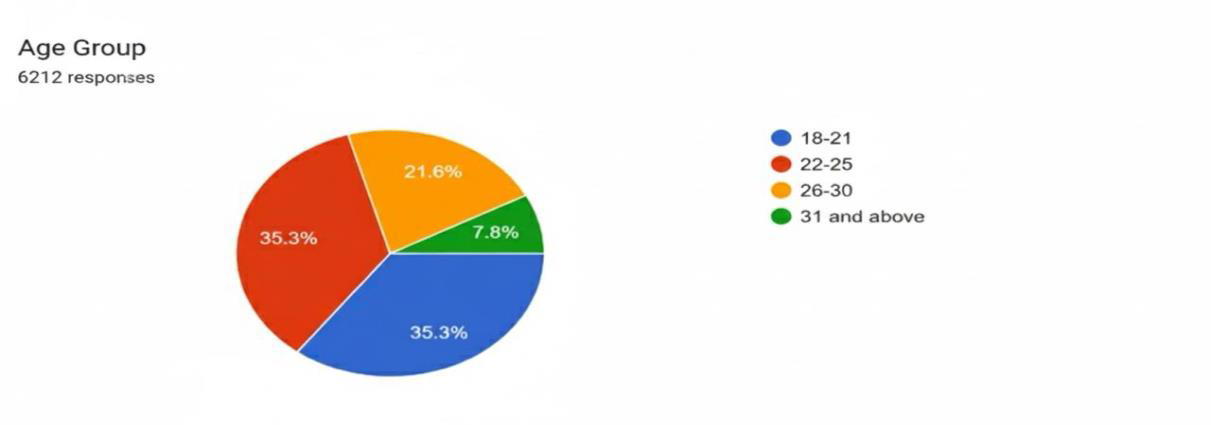
The survey received 35.3% Responses from people ranging from ages 18 to 21 and 22 to 25. The remaining responses are from older age brackets. This distribution confirms that the data primarily consist of the views of the younger generation. This makes the findings very relevant to the central theme of the paper, which is the youth perspective on corporate social responsibility.
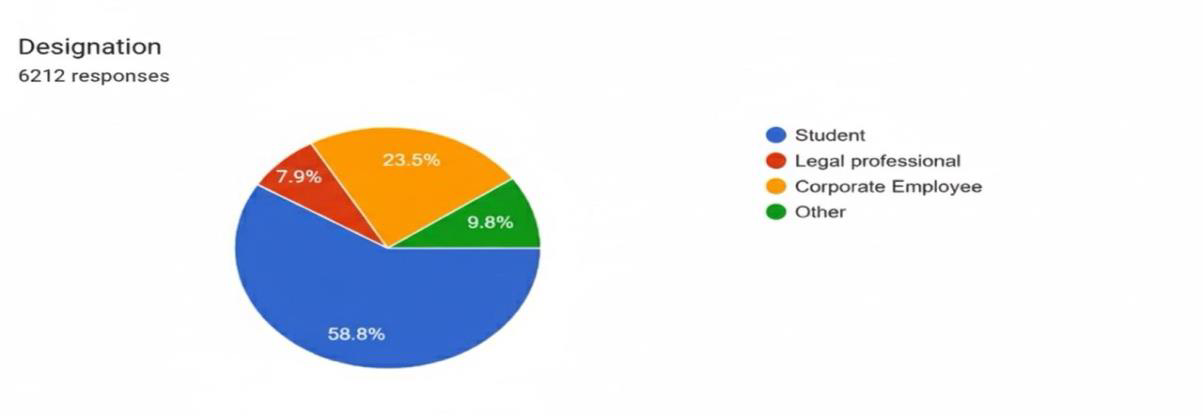
The professional or educational background of the respondents further clarifies the demographic and shows that the largest segment, which is 58.8% is of students. And the second largest Representation is of the corporate employees. Therefore, the students and corporate employees who represent the immediate future workforce and young professionals are the dominant Responders in the present data.
4.2 Understanding of CSR
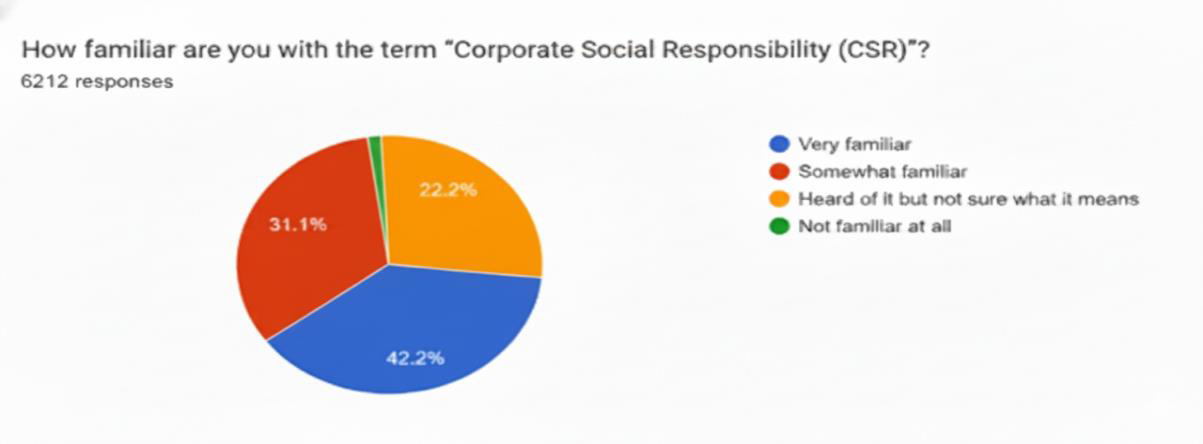
The data indicate that the respondents have a high level of awareness of the term Corporate Social Responsibility, as 42.2% of the respondents mentioned that they are very familiar with the term CSR, followed by 31.1% which finds the term somewhat similar. 22.2% of the respondents mentioned that they have heard about the term but are not sure what it means. There is only a marginal percentage of Respondents who were not familiar with the term at all. So, the combined figure of over 73% being ‘very familiar’ or ‘somewhat familiar’ shows that CSR is a well-known concept among the young population. They are familiar with the concept and know the importance of CSR in modern corporate discussions. This also symbolises that the respondents can offer informed opinions on the subsequent questions.
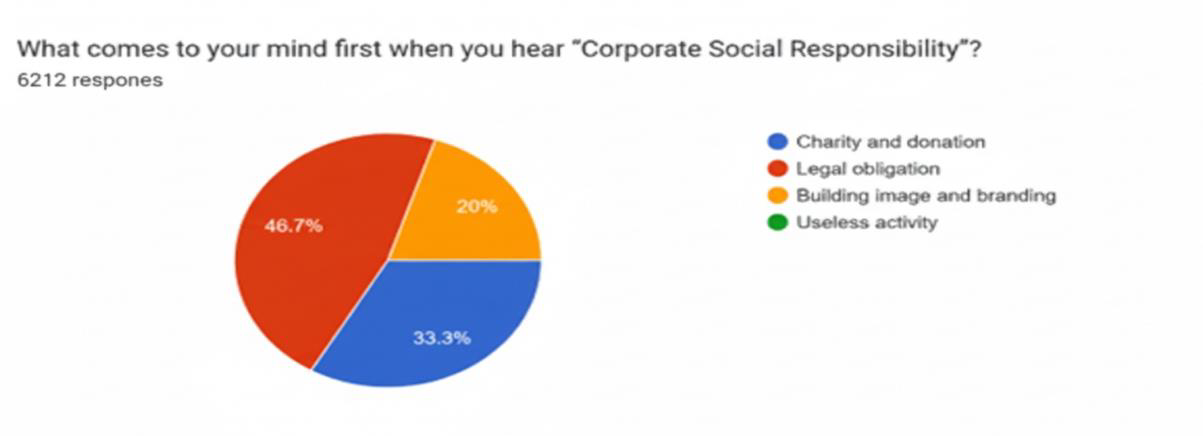
When the respondents were asked about their spontaneous association with CSR and what came to their mind, first, when they hear the term corporate social responsibility, most of the respondents pointed towards legal obligation. The dominant response of “legal obligation”, which is 46.7% has surpassed “charity and donation” (33.3%) and “building image and branding” (20%). This is a critical finding as it points out that the Indian youth primarily perceive CSR as a mandatory legal requirement. People in contemporary times associate CSR less with moral or ethical responsibility, but more with regulatory compliance.
4.3 Perception of Corporate Motivation and Seriousness
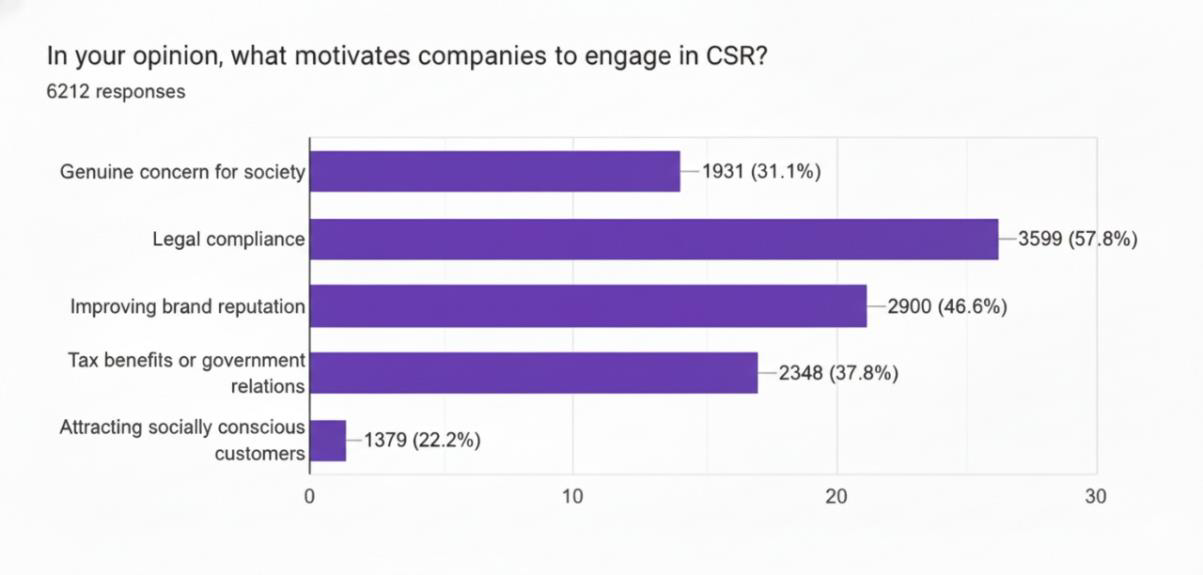
When the respondents were asked to give their opinion on the actual factors that drive corporate CSR engagement, the highest motivating factor turned out to be legal compliance at 57.8%. This also aligns with a perception that was noted in chart 1.4 that CSR is majorly influenced by the legal framework. After legal compliance, youth find “Improving Brand Reputation” (46.6%) as one of the important motivation factors of companies to engage in CSR. This shows that the respondents also recognise the strategic importance of CSR in improving corporate image. The critical point to note here is that only a few respondents (31.1%) think that companies engage in CSR activities because they have a genuine concern for society. They overwhelmingly believe that the primary driver for companies is compliance and not a genuine concern for society. This presents a sceptical view of the youth before us regarding the true ethical intention of corporations behind CSR engagements.
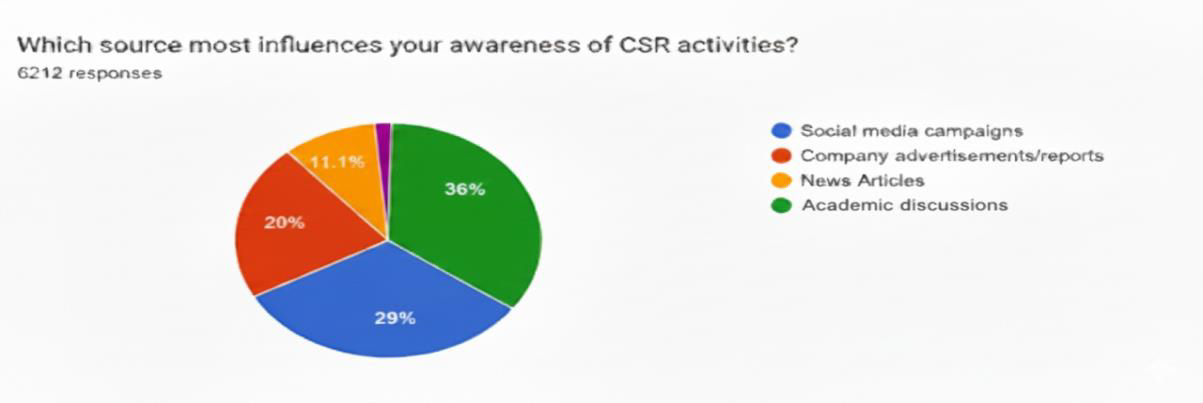
The data reveals that the most influential source for people to get to know about CSR activities is academic discussions (36%). This shows that academic disclosure is playing a very crucial role in informing people and youth about the CSR activities. This also suggests the significant role of educational institutions in shaping the perception of youth on corporate ethics. After academic discussions, “Social Media Campaigns” with 29% of responses, comes as the second most major source of influence on awareness of CSR activities. This highlights the role of digital or social media platforms like Facebook, Instagram, LinkedIn, X (formerly called Twitter) in making people aware of CSR activities.
This finding also shows that youth are mainly learning about CSR activities through academic discussions and social media, and not from the official company reports (only 20%). This accentuates that companies need to disseminate their CSR reports in a better way so that people can get to know about their contributions and the impact that they are making in the field.
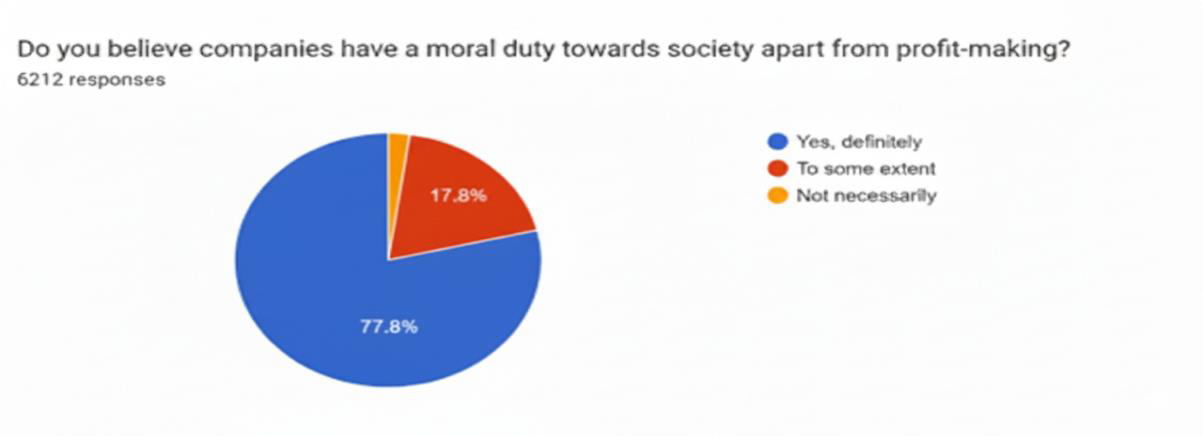
77.8% of the respondents believe that companies definitely have a moral responsibility towards society. This is followed by 17.8% who believe the responsibility is to some extent. There is a marginal percentage of youth who believe otherwise. This signifies that a total of 95.6% of the youth believe that companies have a moral duty towards society, apart from just profit-making. This presents a strong ethical expectation gap as the youth hold the belief that CSR activities should be done, but according to them, corporations are not able to fulfil this standard in practice.
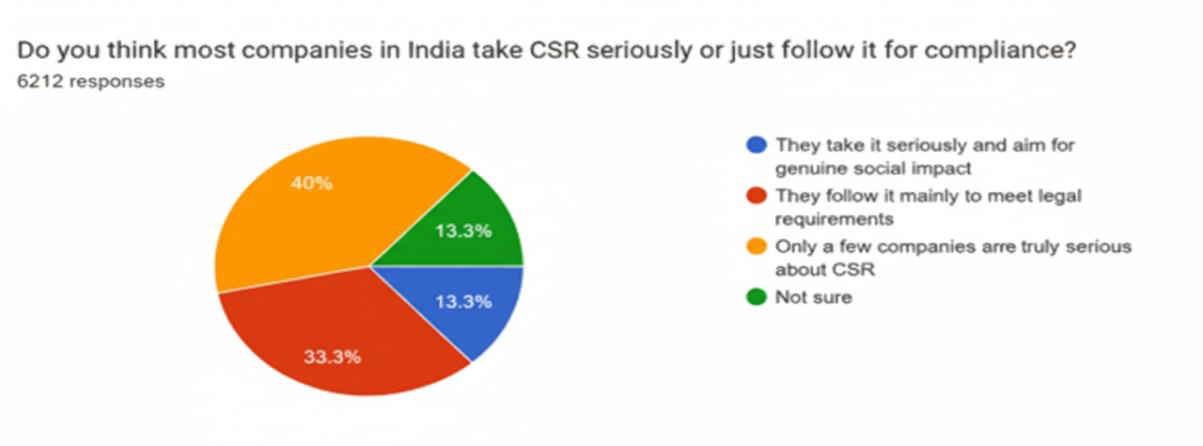
Despite the strong ethical expectations (refer to chart 1.7), only 13.3% of the respondents hold the positive view that companies take CSR activities seriously and aim for genuine social impact. On the contrary, 33.3% of the respondents believe that companies do it mainly to meet legal requirements. This is followed by 40%, which believes that only a few companies are truly serious about CSR initiatives. If we combine these two findings, a total of 73.3% believe that CSR is either a formality for compliance or taken seriously only by a small minority. This perception directly reflects the earlier analysis (refer to chart 1.5), where most of the respondents believed that legal compliance is the most important motivator for companies to engage with CSR initiatives. This also indicates the belief of respondents in CSR greenwashing, and not as a genuine contribution towards society.
4.4 Personal Motivation and Leadership Perspective
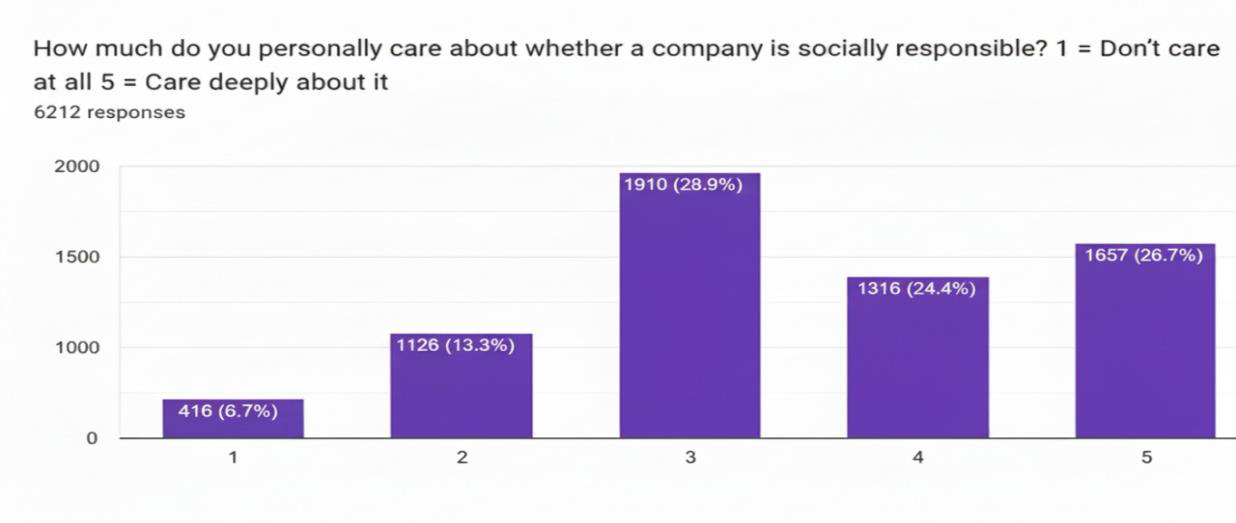
Scores 4 and 5 collectively account for 51% of responses. This shows that half of the respondents personally care about whether the company is socially responsible or not. This finding suggests that CSR is an important factor when it comes to consumer and career choices for the youth.
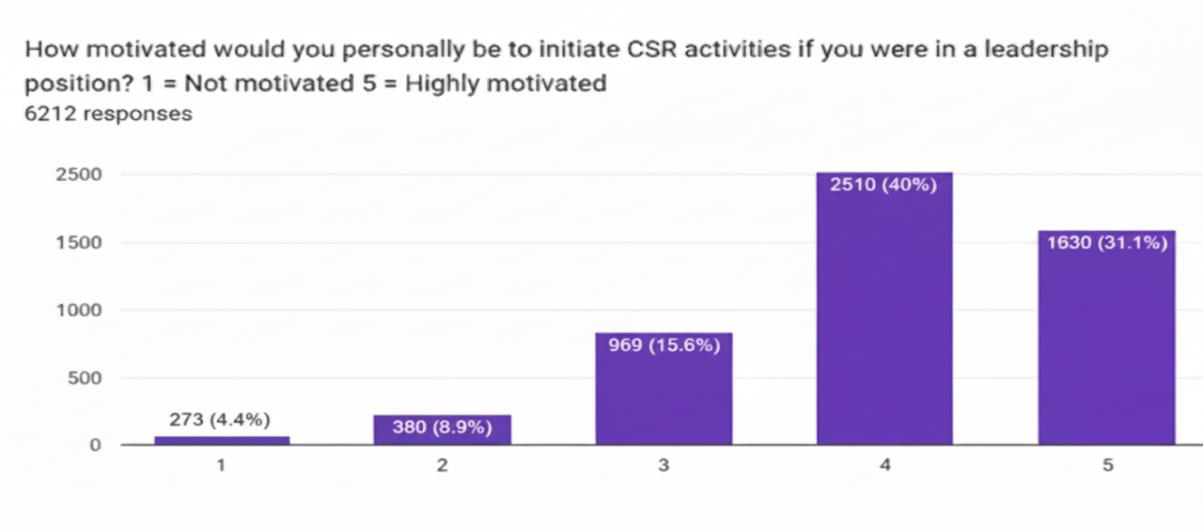
When the respondents were asked about their personal motivation, over 71% (scores 4 and 5 are combined) expressed that they have a high motivation to initiate CSR activities in a leadership role. This denotes that youth are not only demanding ethical behaviour, but they are also personally committed to being ethical leaders themselves when they enter the corporate world in the near future. Conversely, this also indicates an aspiration gap because on one hand, the respondent shows their personal commitment to ethical leadership. But at the same time, they feel this is something that is currently lagging in the corporate world.
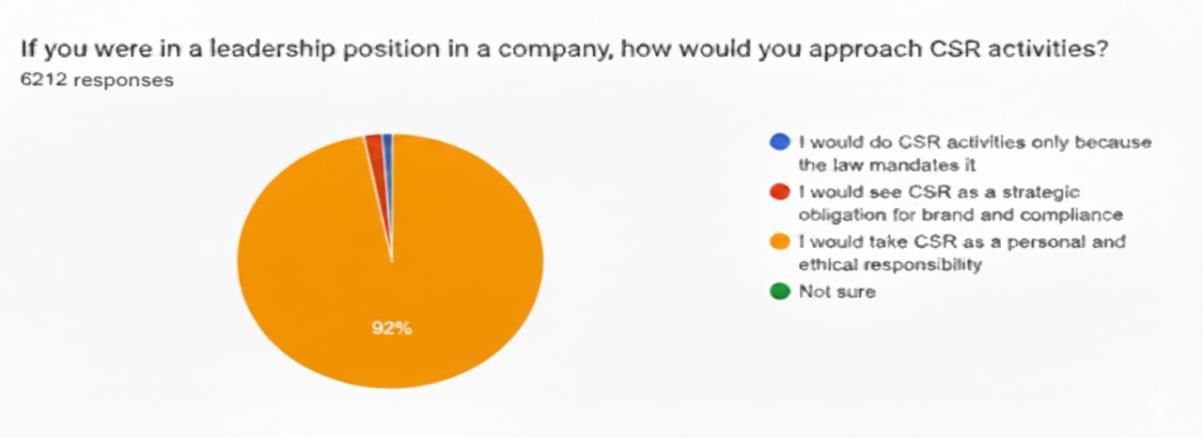
The overwhelming response of 92% signifies that the youth would approach CSR as a “Personal and Ethical Responsibility”. And only a negligible percentage would see CSR as a strategic obligation for brand and compliance. The high percentage confirms that the youth, who are the future leaders, strongly desire to institutionalise CSR as an inherent ethical business value.
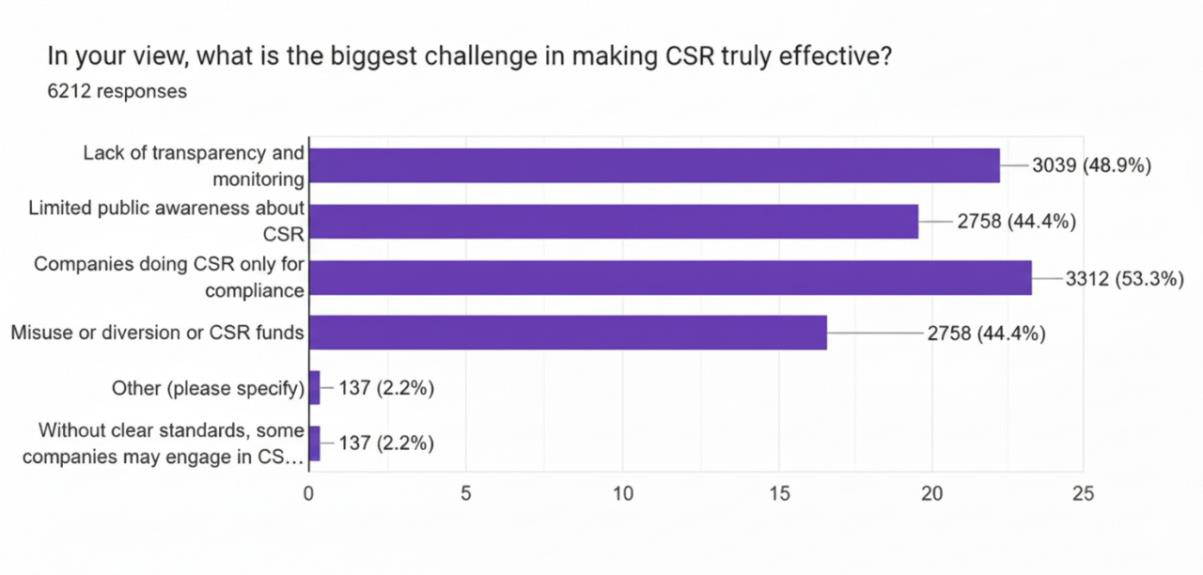
When it comes to the challenges in making CSR truly effective, “Companies doing CSR only for Compliance” came out as the biggest factor with 53.3%. This is followed closely by “Lack of Transparency and Monitoring” (48.9%). This finding reveals that most of the youth think that the primary barrier to making CSR activities effective is due to the lack of genuine commitment by the corporations and weak governance. Therefore, there must be a strong accountability mechanism that can keep a regular check on companies.
5. Discussion
5.1 Significance of the Data Collected
The data collected in this study presents the mindset of the youth of India in relation to CSR. The response suggests that this generation is very much aware of the concept of CSR. They are also capable of differentiating between performative compliance and authentic responsibility. The youth have a critical outlook, as according to them, most of the corporations today are undertaking CSR primarily to fulfil legal requirements, but they also simultaneously expressed their strong desire to approach CSR as a moral and social obligation if they were placed in corporate decision-making roles themselves in the future.
This perception is very crucial because, on one hand, it shows the optimism of the youth about their own potential to bring ethical reforms in the future, and on the other hand, it also reflects disillusionment with the current corporate culture. If we see it from a broader perspective, these findings point towards the emergence of conscious capitalism among the younger generation. We can clearly comprehend from the findings that youth are no longer seeing CSR as a charity or something that corporations should do for legal compliance. Instead, they see it as a vital part of business accountability. If we look at it in the long run, this could bring more authenticity and sustainability to corporate practices.
The findings also resonate with stakeholder theory,[20] which was proposed by R. Edward Freeman in the year 1984. The theory states that businesses do have the responsibility towards their shareholder, but equally they also have responsibility towards all the stakeholders, like employees, consumers, communities, and the environment.[21] The responses of the youth also reflect the same belief, as they also consider CSR to be an ethical and moral duty that the corporation owes to society at large. Their ideology is not limited to profit maximisation by companies, but it also aligns with Freeman’s idea that the long-term success of any business depends on the well-being of all stakeholders who are involved.
This also connects with the triple bottom line theory,[22] which was introduced by John Elkington in the year 1994. The theory accentuates that people, planet and profit are the three important elements of sustainable corporate performance.[23] The understanding of the youth of CSR as a moral obligation presents a shift towards this broader sustainability perspective, where the planet has also been put equally substantial like the people and the profit for a company.
Thus, the overall pattern of data highlights the awareness, idealism and sense of responsibility of youth, which can bring a potential cultural transition in the future within Indian corporate governance.
5.2 Current Scenario of CSR Implementation in India
The data of FY 2023-2024 shows that Indian corporates have spent as much as around ₹34,909 crore on CSR.[24] This is a 13% rise over the prior year.
Key companies that have heavily invested in CSR initiatives are:
- HDFC Bank: spent ~₹945 crore in FY24.[25]
- Reliance Industries Ltd.: ~₹900 crore.[26]
- Tata Consultancy Services Ltd. (TCS): ~₹827 crore.[27]
The spending of the top 10 companies alone accounts for roughly 17% of the total.[28] This is a concerning part as it depicts that there are only a small number of large companies that are creating headlines when it comes to CSR engagements. Various large firms and many smaller firms are either spending very minimally or are not consistent with their CSR initiatives. Corporate audit and reporting studies also show that there are around 1/3 of companies do not have measurable goals or sufficient transparency in the disclosure of CSR.[29] This supports the findings of the survey that youth believe most companies are engaging in CSR for compliance and not as an ethical and social priority (Refer to Chart 1.5). So, in practice, the criteria that companies have to spend 2% of the average net profit towards society is creating a legal baseline for companies, but it does not at all guarantee consistent sincerity.
Apart from that, investigations show that most of the CSR funds are usually concentrated in particular states and sectors. For example, the education and health sector attracts the largest share and Technology Incubators, slum area development receive the lowest funds. Not just this, many districts and NGOs are facing under-coverage or even a delay in payments. This strongly highlights the weaknesses in the implementation and monitoring of CSR.
Recently, in February 2025, one of the largest CSR scams was seen in Kerala. The scam involved around ₹1000 crore in funds that were collected by a man from several companies under the guise of CSR contributions. In the incident, the accused man allegedly offered various discounted products using fake claims of CSR. He misled victims by offering them two-wheelers at half the market price, by claiming that he had access to CSR funds from multiple companies.[30] Then, in August 2025, the Income Tax department found out about a massive diversion of CSR funds that was going on on a very large scale. The department raided six states, including Uttar Pradesh, Rajasthan, Gujarat, Maharashtra, West Bengal and Madhya Pradesh and targeted over 30 locations and non-profit organisations. During the investigation, they discovered that the CSR contributions, which are mandated under the Companies Act, 2013, are not being spent on social welfare. Instead of that, all the funds are going into shell firms and bogus trusts. The amount is estimated to be as large as ₹800 crore.[31]
These incident highlights the absence of transparency, weak due diligence and lack of centralised oversight when it comes to CSR. The incident also resonates with the findings of the data (refer to chart 1.12), where a large proportion of respondents mentioned the lack of transparency as one of the biggest challenges, which is creating a hindrance in making CSR a truly effective practice.
5.3 Future Implications for Stakeholders
a. Implications for Corporations: The corporations need to see CSR as a genuine, social and ethical responsibility that they have towards society. They must work towards enhancing the transparency and dissemination of their CSR reports widely to the public to raise more awareness among people. Moreover, if there are socially aware professionals in the leadership position, it may lead to more equitable allocation of funds and even greater transparency in reporting. This can ultimately help in making a sustainable CSR ecosystem.
b. Implications for Policymakers: Section 135 of the Companies Act 2013, which makes 2% spending by companies towards society mandatory, was definitely an outstanding step that has been taken by the policy-makers. Yet they should focus on strengthening the monitoring mechanism and improving disclosure requirements. Policy makers could also incentivise innovation-driven CSR. Apart from that, they could opt for a collaborative project between corporations, NGOs and local government. This could help to solve the regional and sectional disparities that exist in the CSR spending.
c. Implications for Youth: For the youth themselves, these findings can be treated as both a reflection as well as a responsibility. Currently, they believe that corporations should engage in CSR activities out of genuine social concern, and they are even upbeat about the stance that, in the future, they will approach CSR as a personal and ethical responsibility. This presents a positive and optimistic shift, but here it is equally important that they actually implement these ideals into practice when they join the corporate world.
6. Suggestions and Conclusion
India’s legal experiment with mandatory CSR has definitely raised many social development prospects; however, the transition from compliance-focused reporting to impact-oriented practice still requires a lot of systemic reforms. The youth survey provides empirical evidence that demand for transparency, long-term engagement, institutional oversight, and especially meaningful participation by young people, meaningful participation is strong in the public. The scheme for enhancing CSR efficiency includes standardised qualitative reporting (aligned with GRI), multi-year project incentives, an Independent CSR Regulatory Authority and public dissemination, along with youth engagement and false claims penalty calibration as the main components.
The following are some suggestions to enhance the quality, accountability, and social impact of CSR in India.
1. Enhance transparency through qualitative reporting
In most cases, companies reveal the money spent and general categories of activities, but they do not publish any uniform qualitative outcome metrics. To reform this, India should make a rule that ensures that CSR disclosures above a certain material threshold must be done according to an internationally recognised sustainability reporting framework (like the Global Reporting Initiative), and companies must provide impact stories and outcome metrics along with the financial numbers. GRI and other standards provide a wide range of support for the identification of what is important, the impact measurement, and the communication to stakeholders, which can be customised for the compulsory CSR reporting.[32]
2. Prioritise multi-year projects
Projects lasting for years allow for the possibility of taking the initial measurement, making the necessary corrections at the middle stage, and doing the final evaluation—all these steps are crucial for establishing the ability to generate social returns over a long period. The companies that have set up their programs as structured multi-year initiatives, for instance, through dedicated foundations or long-term NGO partnerships, which highlight the community acceptance and impact that can be measured. Hindustan Unilever and some Tata group projects are good examples of multi-year programmatic approaches. Proposals such as including the multi-year commitments in the CSR compliance calculations as a way of encouraging this practice would definitely lead to making broad impacts.
3. Establish an Independent CSR Regulatory Authority (ICRA)
There is a necessity for a central coordination and control mechanism. The Independent CSR Regulatory Authority can keep a national register of CSR projects; issue general instructions on impact measurement that are uniform; carry out compliance reviews based on risks; and display public performance dashboards at regular intervals. The comparison of the institutionalised CSR coordination in the East Asian economies shows how central coordination could help align corporate efforts with national development priorities, at the same time, reducing duplication and improving monitoring. The authority’s role should include both oversight, facilitation and building up the capacity of the smaller companies and NGOs.[33]
4. Mandate wide and accessible circulation of CSR information
The survey finding that a large number of respondents are still not aware of local CSR activities points to a dissemination gap. It should be made mandatory for companies to submit their CSR reports to corporate websites, the appropriate government portals, and in summarised public-facing formats, including regional language summaries and visual dashboards, within a defined period of time at the end of each year. The widening of the circle brings in more scrutiny from the stakeholders, encourages participation from the locals, and also reinforces the social license for corporate programs. By using the same templates for reporting, companies will be able to compare their performance with others, and thus the benchmarking will be across the firms and sectors.
5. Institutionalise youth engagement mechanisms
Students and young professionals can engage in CSR activities through internships, volunteering, and project monitoring. Corporations can institutionalise CSR fellowship schemes, academic-industry project collaborations, and campus outreach programs so that students can actively participate in them. These programs provide double advantages. They not only improve the organisation’s monitoring ability but also provide the youth with access to the social sector, thereby increasing the long-term social impact and strengthening the corporate-community bond.
6. Checking False Claims and Strengthening CSR Accountability
The Ministry of Corporate Affairs (MCA) might also create a monitoring cell that regularly cross-checks the reported information with the actual implementation and feedback from the community. The measures taken to strengthen misreporting penalties for CSR and, at the same time, the supporting of impactful initiatives through providing incentives would essentially create a regulatory environment that discourages shallow compliance and, at the same time, promotes real social contribution. Not only would such measures eliminate fake claims, but also bring back the trust and transparency of the public, the very things that make responsible corporate behaviour exist.
7. Embed CSR within corporate mission, governance and employee orientation
There is a dire need to incorporate CSR into the core mission of the companies. The corporation can do so by informing its new employees about the CSR initiatives during their orientation session. Companies should educate their employees about the initiatives that they have related to CSR. They must inform them about the objectives and impacts of these projects and the company’s long-term social vision. This will help employees to understand that their company also contributes to society at large, apart from profit monetisation, and will motivate them to participate in CSR activities voluntarily.
If the recommendations mentioned above are accepted, India’s CSR system will shift from being expenditure-oriented to being value-oriented, in line with social values and national development priorities as well as youth aspirations. The major and ultimate aim is to incorporate CSR into the very foundation of the corporate practice so that it can naturally come off as an engagement towards society at large and the public good.
Endnotes
- Companies Act, 2013, § 135 (India). ↩
- Press Information Bureau, CSR is not a charity, but a duty & responsibility towards society, says Union Minister Dr. Jitendra Singh (Jan. 13, 2024), pib.gov.in (last visited Nov. 8, 2025). ↩
- Companies (Corporate Social Responsibility Policy) Rules, 2014, Schedule VII (India). ↩
- World Business Council for Sustainable Development, Corporate Social Responsibility: A Primer (1999), wordpress.com (last visited Nov. 8, 2025). ↩
- Tata Trusts, Our History 2001-2024: Empowering Communities Through Strategic Philanthropy, tatatrusts.org (last visited Nov. 8, 2025). ↩
- Vaishnavi Aiyer, The Journey of Corporate Social Responsibility in India, 3 Int’l J. L. Mgmt. & Hum. II (2020), ijlmh.com (last visited Nov. 8, 2025). ↩
- SLM, The Evolution of CSR Law in India: From Voluntary Actions to Legal Mandates (Apr. 23, 2024), slm.mba (last visited Nov. 8, 2025). ↩
- Radha Madhavi Chiruvolu & A. Senthilrajan, The Evolution of Corporate Social Responsibility in India: From Philanthropy to Strategic CSR, 11 IJFANS Int’l J. Food & Nutritional Sci. 160 (2022). ↩
- Bharti Mishra Nath, Decade of Transformational Changes in India’s CSR Landscape, NDTV (Mar. 13, 2024), ndtv.com (last visited Nov. 8, 2025). ↩
- Reliance Industries Ltd., Report on Corporate Social Responsibility 2022‑23 (Aug. 2023), ril.com (last visited Nov. 8, 2025). ↩
- Infosys Foundation, Education: Initiatives, infosys.org (last visited Nov. 8, 2025). ↩
- Tata Sustainability Group, Thousand Schools Programme, tatasustainability.com (last visited Nov. 8, 2025). ↩
- Fundamentals of CSR: CSR Theories—Carroll Pyramid, Triple Bottom Line, Stakeholder Model, CSR Education, csr.education (last visited Nov. 8, 2025). ↩
- Min Ah Jeon & Daechun An, A Study on the Relationship Between Perceived CSR Motives, Authenticity and Company Attitudes: A Comparative Analysis of Cause Promotion and Cause‑Related Marketing, 4 Asian J. Sustainability & Soc. Responsibility 7, 3 (2019). ↩
- M.R. González-Rodríguez, M.C. Díaz-Fernández & B. Simonetti, Corporative Social Responsibilities Perceptions: An Approximation Through Spanish University Students’ Values, 47 Qual. Quant. 2379, 2379–2398 (2013). ↩
- Maria Anne Schmidt & Daniel Cracau, A Cross-Country Comparison of the Corporate Social Responsibility Orientation in Germany and Qatar, 37 Bus. & Prof. Ethics J. 67, 67–104 (2018). ↩
- Isabelle Maignan & O.C. Ferrell, Corporate Social Responsibility and Marketing: An Integrative Framework, 32 J. Acad. Mark. Sci. 3, 3–19 (2004). ↩
- Mobin Fatma, Zillur Rahman & Imran Ali Khan, Building Company Reputation and Brand Equity Through CSR: The Mediating Role of Trust, 33 Int’l J. Bank Mark. 840, 840–856 (2015). ↩
- C.B. Bhattacharya & Sankar Sen, Doing Better at Doing Good: When, Why, and How Consumers Respond to Corporate Social Initiatives, 47 Cal. Mgmt. Rev. 9, 9–24 (2004). ↩
- R. Mahajan, W.M. Lim, M. Sareen, S. Kumar & R. Panwar, Stakeholder Theory, 166 J. Bus. Res. 114104 (2023), sciencedirect.com (last visited Nov. 8, 2025). ↩
- Scott Zimmer, Stakeholder Theory and Analysis (2021), ebsco.com (last visited Nov. 8, 2025). ↩
- Kelsey Miller, What Is the Triple Bottom Line? (Dec. 8, 2020), hbs.edu (last visited Nov. 8, 2025). ↩
- Timothy F. Slaper & Tanya J. Hall, The Triple Bottom Line: What Is It and How Does It Work?, 46 Ind. Bus. Rev. (I.U. Kelley Sch. Bus., Spring 2011), ibrc.indiana.edu (last visited Nov. 8, 2025). ↩
- Indian corporates’ CSR spending hits record ₹34,909 cr in FY24; HDFC Bank, RIL, TCS lead the way, Fortune India (June 23, 2025), fortuneindia.com (last visited Nov. 8, 2025). ↩
- Top 10 CSR spenders in FY24: HDFC Bank, Reliance at the forefront – Check full list here, Financial Express (Apr. 28, 2025), financialexpress.com (last visited Nov. 8, 2025). ↩
- Vajiram & Ravi, CSR Spending in India Grows 16% in FY24, Key Trends, Contributors (Apr. 28, 2025), vajiramandravi.com (last visited Nov. 8, 2025). ↩
- Vajiram & Ravi, CSR Spending in India Grows 16% in FY 24 (Apr. 28, 2025), vajiramandravi.com (last visited Nov. 8, 2025). ↩
- Indian corporates’ CSR spending hits record ₹34,909 cr in FY24; HDFC Bank, RIL, TCS lead the way, Fortune India (June 23, 2025), fortuneindia.com (last visited Nov. 8, 2025). ↩
- RBC Global Asset Management, Improving Corporate Social Responsibility in India (Feb. 5, 2021), rbcgam.com (last visited Nov. 8, 2025). ↩
- India Today, Over Rs 1,000 crore fraud exposed in Kerala corporate social responsibility fund scam, India Today (Feb. 6, 2025), indiatoday.in (last visited Nov. 8, 2025). ↩
- I-T Raids in 6 States to Unearth CSR Fund Diversion Scam, Times of India (Aug. 25, 2025), timesofindia.indiatimes.com (last visited Nov. 8, 2025). ↩
- Global Reporting Initiative, GRI Standards (2025), globalreporting.org (last visited Nov. 8, 2025). ↩
- S. Choi & R.V. Aguilera, Corporate Social Responsibility Dynamics in South Korea and Japan: A Comparative Analysis, in Corporate Social Responsibility: A Case Study Approach (C. Mallin ed., Edward Elgar Publ’g 2009), squarespace.com (last visited Nov. 8, 2025). ↩
The views expressed in this paper are those of the authors and do not necessarily reflect the position of the Centre for Corporate Laws and Governance or Dharmashastra National Law University, Jabalpur.
← Back to Corp Summit 2025